
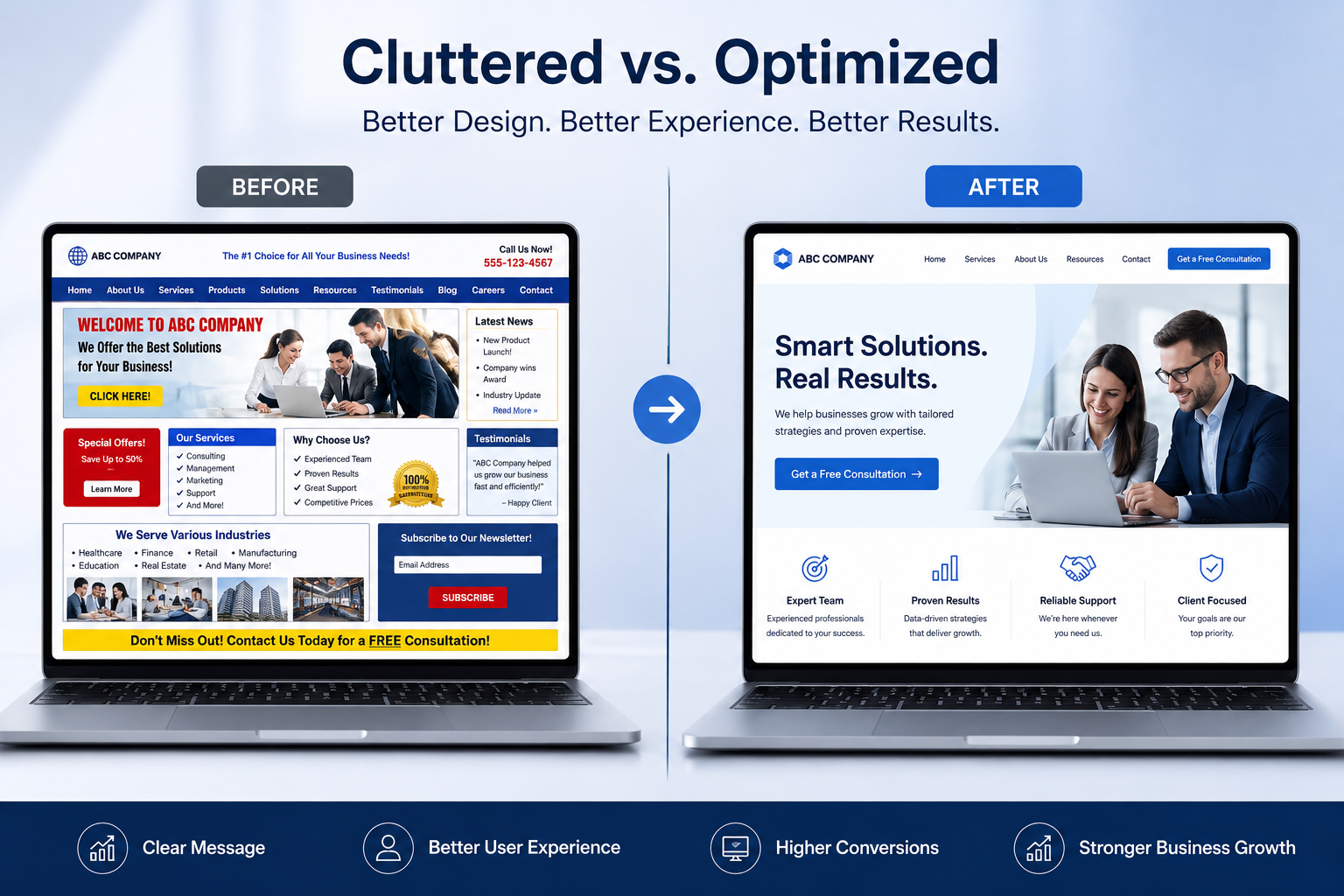
Most New Jersey business owners assume that when their website stops producing leads, the only fix is an expensive rebuild.
The truth is far less painful, and far less expensive.
The website you already own is almost certainly capable of converting more visitors into customers. The problem is rarely the architecture. It is the way search engines and visitors experience the pages you already have.
Search engine optimization and conversion rate optimization are usually treated as separate disciplines, handled by separate vendors, on separate timelines. That separation is exactly why so much money gets wasted. SEO without conversion thinking brings the wrong people to the right pages. Conversion work without SEO polishes pages that no one can find.
Combine them on the website you already have, and you get compounding returns without the six-figure redesign invoice.
Quick answer: You can usually win more leads from the website you already own by aligning SEO with conversion optimization, fixing page speed, mobile usability, and calls to action, rather than paying for a costly rebuild.
Click here to book a free 15-minute demo to see the fastest conversion wins on their existing pages
Why a Redesign Is Usually the Wrong First Move for SEO and Conversions
A full rebuild typically takes three to six months and costs anywhere from several thousand to tens of thousands of dollars.
Worse, it resets your search equity to zero on launch day.
Every missed redirect, every changed URL, and every page that loses its internal links is a small leak in the traffic you spent years earning. Many businesses launch a beautiful new site and watch organic traffic fall off a cliff for ninety days while Google re-learns it.
Before you accept that risk, ask a sharper question. Is the current site actually failing to convert, or is it simply failing to attract qualified visitors and guide them to act? Google's own SEO Starter Guide makes clear that the fundamentals, not a flashy redesign, are what move rankings.
In the overwhelming majority of cases we see across northern New Jersey, the existing pages are structurally fine. They are just under-optimized.
That is a tuning problem, not a demolition problem.
Define What Conversion Actually Means for Your Business
Conversion is not a single moment. It is a sequence of small yeses that lead to one big yes.
For a Bergen County law firm, a conversion might be a completed consultation request. For an e-commerce store, it is a checkout. For a service business, it is often a phone call or a form fill.
Before you touch a single page, define the one or two actions that genuinely move revenue, then define the smaller steps that lead there.
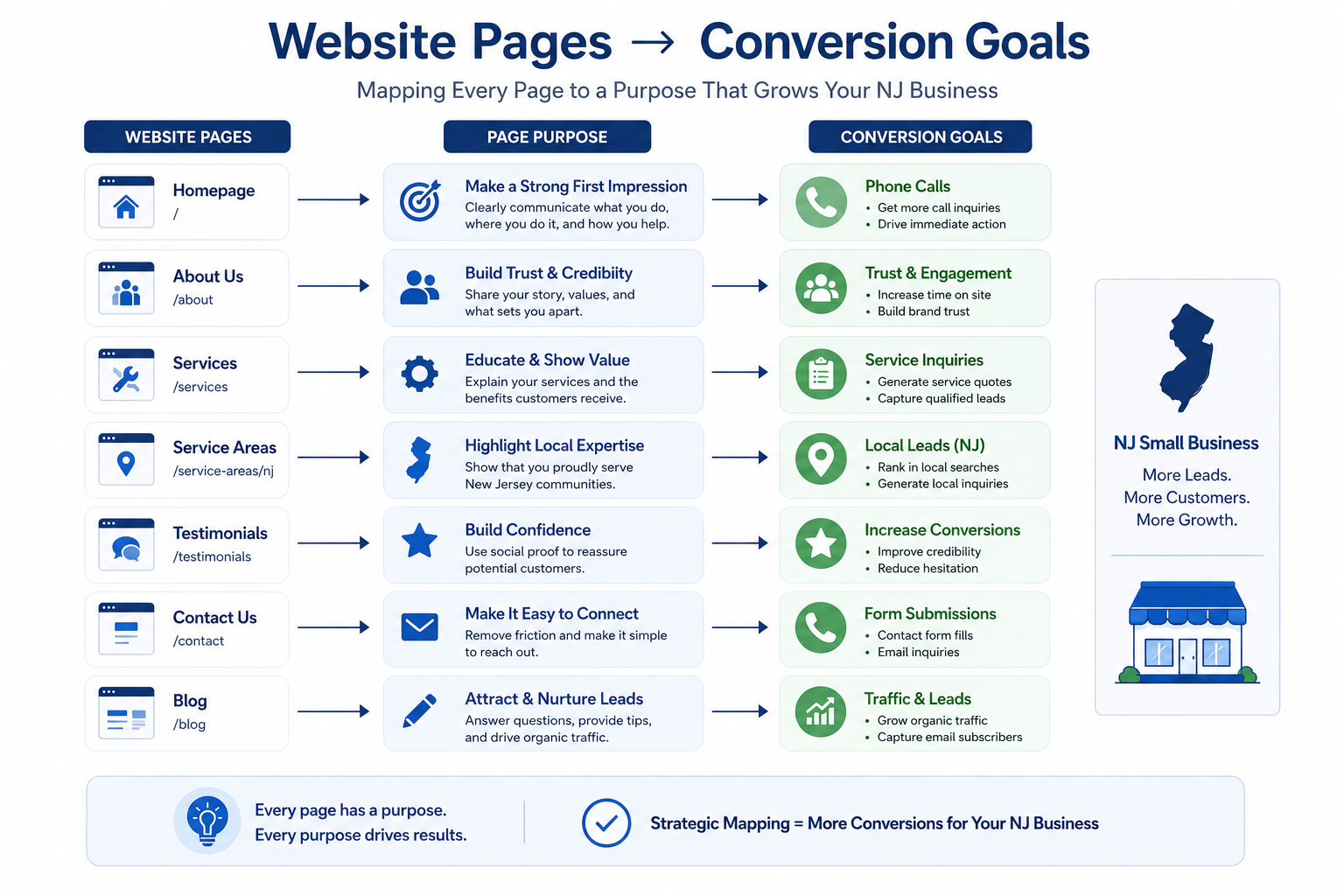
Once you know your primary conversion action, you can map every important page to its job. A blog post earns trust and captures a search query. A service page explains value and drives an inquiry. A homepage orients and routes. When each page has a clear job, you can measure whether it is doing that job — and fix it if it is not — all without rebuilding anything.
How to Align Search Intent with Conversion on Pages You Already Have
This is where SEO and conversions meet. Every search query carries intent.
Someone typing 'emergency plumber Hackensack' wants a phone number and reassurance, not a 1,500-word company history. Someone searching 'how much does a kitchen remodel cost in NJ' is researching, not buying today, and wants an honest range plus a reason to keep reading.
When the page that ranks for a query matches the intent behind that query, conversions rise sharply with zero design changes.
Audit your top landing pages against the queries that actually bring people there. If a page ranks for a buying-intent keyword but reads like a research article, you have a mismatch.
Reorder the page so the answer and the call to action appear above the fold, and move the supporting detail down. You have just improved conversions using existing content and a clearer understanding of why people arrived.
Fix the Technical Issues That Quietly Kill Conversions
Page speed is a conversion issue before it is a ranking issue.
Conversion rates drop measurably with every additional second of load time, and mobile visitors abandon fastest of all. The good news is that speed is fixable on your current site. Compress and properly size images, defer non-critical scripts, enable browser caching, and remove the heavy third-party widgets that add little value. None of this requires a redesign.
Mobile usability is the second silent killer. More than half of local searches in New Jersey happen on a phone, often from someone in a parking lot deciding where to go next. If your tap targets are too small, your forms demand too much typing, or your click-to-call button is buried, you are losing ready buyers. Test every key page on an actual phone and fix the friction.
Core Web Vitals matter here too. According to Google's Core Web Vitals guide on web.dev, Google's page experience signals reward fast, stable, responsive pages — tracking loading, interactivity, and visual stability. The same things that please Google reduce the frustration that makes visitors leave.
How to Turn Existing Content and Pages into Active Conversion Paths
Most established websites are sitting on a library of blog posts and pages that earn traffic but ask for nothing.
This is the single biggest opportunity to lift conversions without new infrastructure.
Go through your highest-traffic pages and ask one question of each: what is the most logical next step for someone who just read this? Then add that step explicitly, whether a relevant offer, a related service link, a downloadable guide, or a clear call to book.
Internal linking is the connective tissue. When a blog post about choosing a roofing contractor links to your roofing service page, you pass both SEO authority and human readers toward the pages that convert. That is exactly how our website and SEO services are structured from day one.
Write Copy That Answers and Reassures
Conversion copy is not about clever slogans. It is about removing doubt.
Most visitors leave because a question went unanswered: how much does this cost, how fast can you help, are you legitimate, what happens after I click.
Strong pages anticipate those questions and answer them before they are asked. Add an FAQ section to your top service pages, surface pricing ranges where you can, and display proof near the call to action. Copy that clearly answers 'how much' and 'how soon' is more likely to convert a human — and more likely to be cited in an AI overview.
The Most Common Conversion Leaks on Existing Sites
Across the northern New Jersey businesses we audit, the same handful of leaks appear again and again. Not one of them requires a rebuild to fix.
- Buried or missing call to action. Visitors who are ready to act cannot find the button, the phone number, or the form, so they leave.
- Form friction. Every additional field you require reduces completions, so strip your forms to the minimum information you genuinely need to start a conversation.
- Unanswered objections. A visitor wondering whether you serve their town, whether you are licensed, or roughly what something costs will leave if the page stays silent.
- Slow or unstable mobile pages that shift around as they load, causing frustrated taps and accidental exits.
- A homepage that tries to say everything and therefore says nothing.
Each of these is an editing problem, solvable on the site you already own.
A Realistic Example: Bergen County HVAC
Picture a Bergen County HVAC company whose site already ranks decently for 'furnace repair' in a couple of nearby towns. Traffic is fine; the phone is quiet.
An audit reveals the problem in minutes. The service page opens with three paragraphs of company history, the phone number sits in small footer text, and there is no click-to-call button on mobile — where most of the traffic comes from. There is no mention of emergency availability, no reviews, and no pricing guidance.
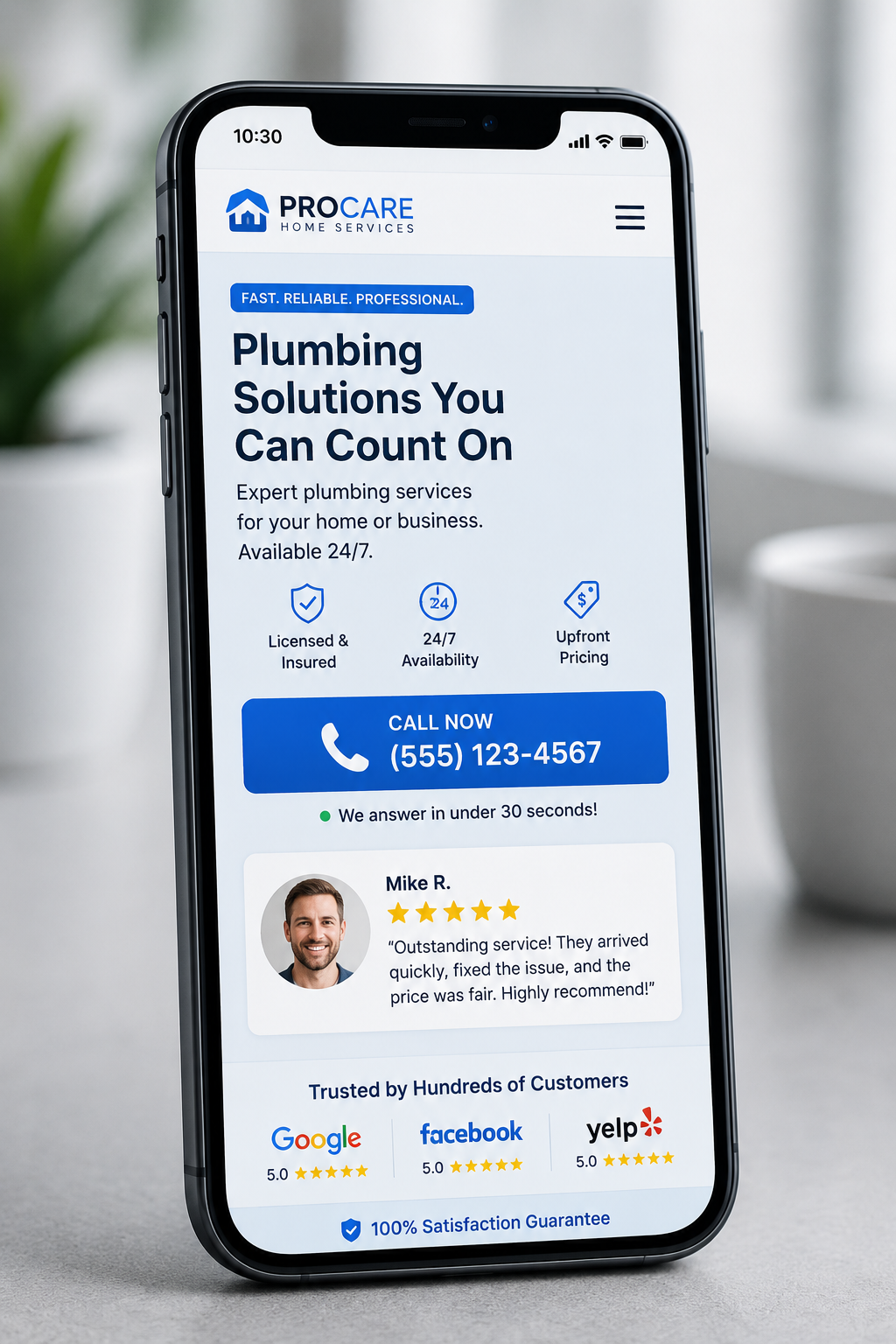
None of this calls for a new website. The fix is a sequence of edits: a bold click-to-call button and a one-line emergency promise at the top, three recent five-star reviews beside it, a short FAQ answering 'how fast can you come out' and 'what does a typical repair cost,' and a compressed hero image that loads in under two seconds.
Within weeks, the same traffic converts at a noticeably higher rate — because the page finally matches what an anxious homeowner with a broken furnace actually needs.
Why wait? Request a no-pressure conversion audit of your top service pages today -->
Frequently Asked Questions
Do I need a new website to improve conversions?
Almost never. Most conversion problems come from unclear calls to action, slow mobile pages, and unanswered questions — all of which are editable on your current site. A rebuild resets your search equity and costs far more than targeted on-page fixes.
How fast can I see results from conversion fixes?
On-page and speed fixes can lift conversions within weeks, because you are improving how existing traffic behaves rather than waiting for new rankings to build. Call-to-action and mobile speed improvements often show measurable gains within the first month.
Will SEO edits hurt my current rankings?
Thoughtful on-page edits and internal linking usually help rankings, not hurt them. The real risk comes from full rebuilds that change URLs without proper redirects, which can erase years of accumulated search equity overnight.
What should I fix first on my existing website?
Start with your highest-traffic pages: clarify the call to action, speed up mobile load time, and answer the cost and timing questions buyers ask most. These three fixes consistently produce the fastest measurable conversion lifts.
Your 90-Day Plan: Measure, Fix, and Repeat Without a Rebuild
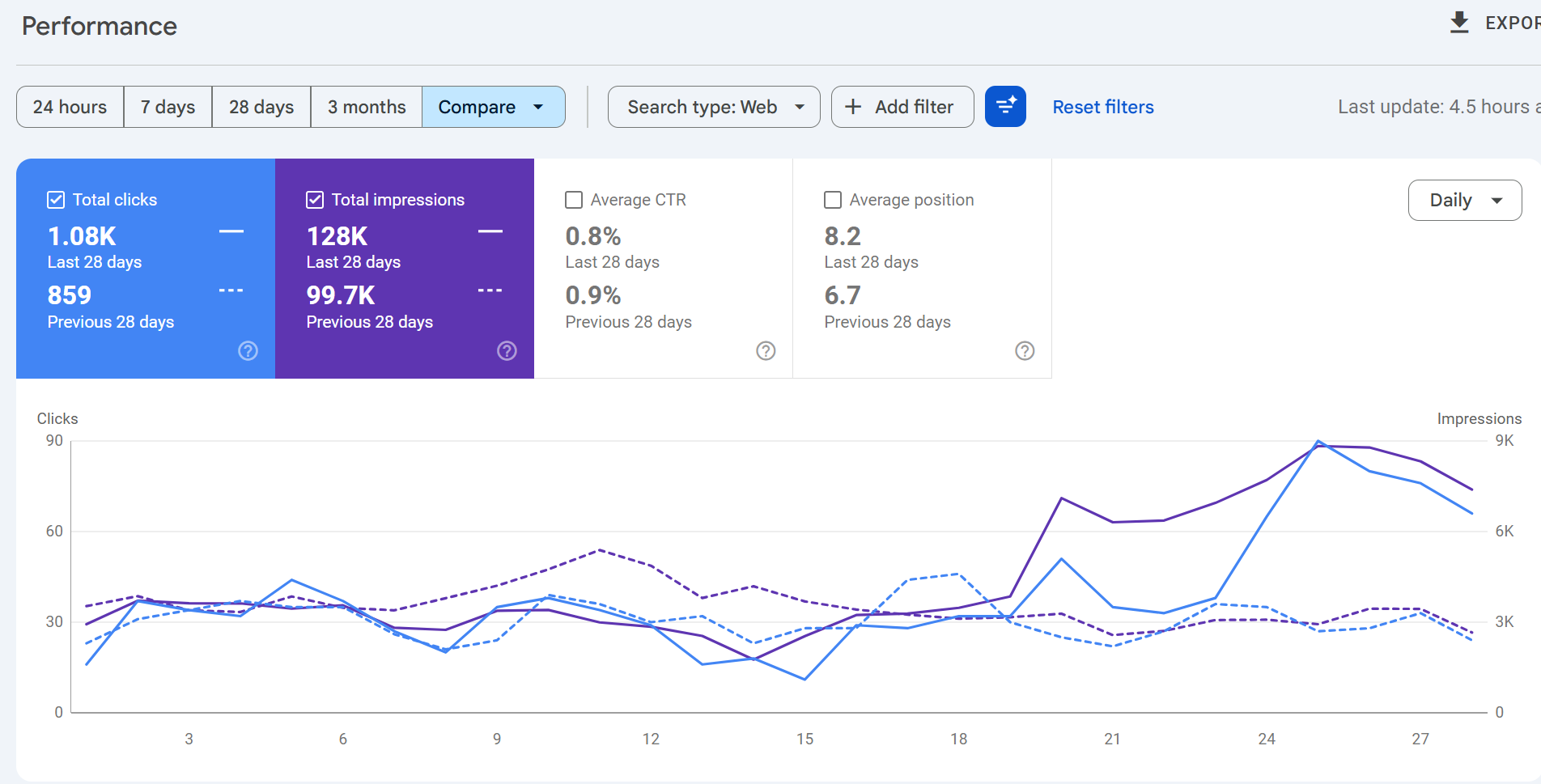
None of this matters if you cannot see the result. Set up conversion tracking before you start changing pages, so you can attribute lifts to specific edits.
- Month 1 — Establish your baseline. Track conversion rate by page, form completions, calls, and how organic visitors move through the site.
- Month 2 — Ship the highest-impact fixes first. Usually the calls to action, mobile speed, and the objection-answering copy. Watch which numbers move.
- Month 3 — Double down on what worked and expand it to the next tier of pages.
When you can see which change moved which number, optimization stops being guesswork and becomes a repeatable system.
Your website does not need to be reborn. It needs to be tuned so the right people find the right pages and are clearly guided to act. Aligning SEO with conversion optimization on the site you already own is faster, cheaper, and lower-risk than any rebuild — and it protects the search equity you have spent years accumulating.
Start with intent, fix the friction, activate the content you already have, and measure relentlessly. The redesign can wait. Once your current site is converting properly, you may discover you never needed one.
Book a 15-minute demo — we will show you the fastest conversion wins on your existing pages, no redesign required.